Choosing the right Rubber Hose Clamp in 2026 requires more than matching a diameter to a product label. A clamp may look suitable on a workshop bench, yet fail after months of vibration, heat, moisture, or pressure changes. The correct choice depends on hose material, connection design, operating temperature, fluid exposure, and installation space. Small details matter. A sharp-edged band can damage soft rubber. Excessive tightening can restrict flow or cut into the hose. Insufficient tension may create a slow, hidden leak.
This guide examines practical selection methods used by maintenance technicians, equipment designers, and quality-focused installers. It considers stainless steel grades, band width, screw design, torque control, corrosion resistance, and repeated service conditions. Product specifications and manufacturer testing should support every decision. Visual inspection still helps, but it cannot replace measured compatibility or pressure testing.
Real-world experience also shows that one clamp rarely suits every application. A hose fitted inside a warm engine compartment faces different demands from one used on a garden pump. That distinction is easy to overlook. Even experienced installers make assumptions. I have seen apparently secure connections loosen after vibration because the clamp was chosen by size alone. That mistake deserves attention.
By comparing common clamp styles and practical installation limits, this article helps readers make safer, more reliable choices in 2026. The goal is not the cheapest fitting. It is dependable performance, verified through evidence, careful installation, and honest reassessment when conditions change.
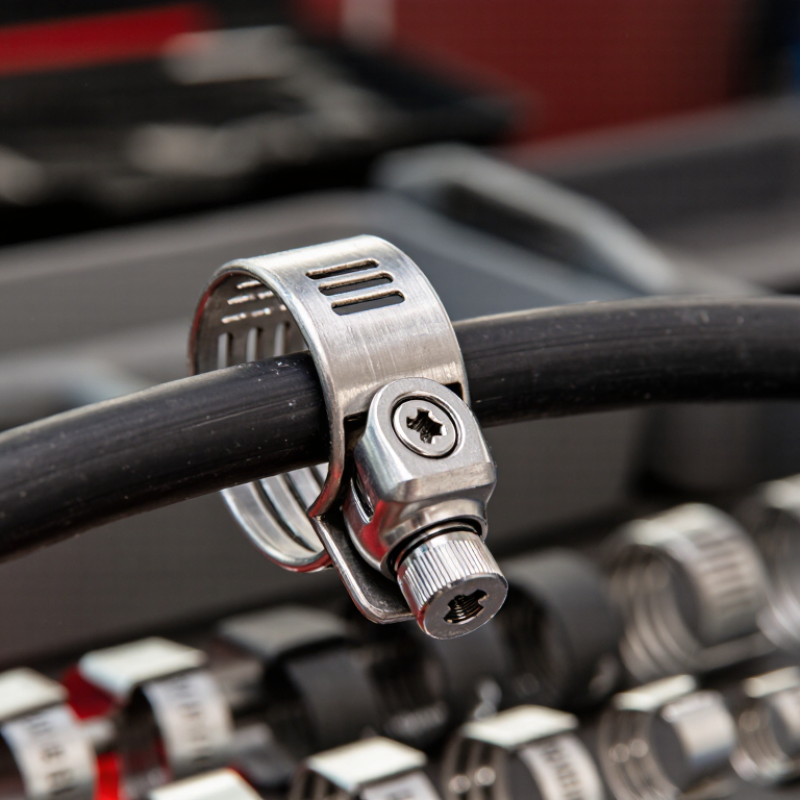
Understanding Rubber Hose Clamps and Their Applications
How to Choose the Right Rubber Hose Clamp in 2026?
Rubber hose clamps secure flexible tubing around fittings, pipes, and equipment connections. They help prevent leaks, movement, and sudden hose separation. Their applications include cooling systems, air lines, fuel-free fluid circuits, irrigation equipment, and light industrial machinery. The application changes everything. Heat, moisture, vibration, and fluid pressure affect clamp performance. A clamp for a warm engine bay may need better corrosion resistance than one used indoors.
During a workshop repair, I once selected a clamp by diameter alone. It fitted, but the hose slowly shifted during vibration testing. I learned this the hard way. Material matters too. Stainless steel suits damp environments and frequent cleaning. Coated steel may work well in dry, protected areas. For rubber hoses, smooth inner surfaces reduce cutting and pinching. Sharp edges are a warning sign.
Measure the hose after it sits on the fitting. Then choose a clamp with a practical adjustment range. Too loose, and leakage may appear. Too tight, and the rubber can deform permanently. Use steady pressure rather than forcing the screw. A calibrated tool improves consistency, although many small repairs still rely on judgment. After installation, check the connection under normal operating conditions. Look for wet spots, flattened rubber, or clamp movement. I still recheck older assemblies because rubber changes with age. That extra minute often reveals a problem before the hose fails.
Assessing Hose Size, Pressure, Temperature, and Material Requirements
How to Choose the Right Rubber Hose Clamp in 2026?
Choosing a rubber hose clamp starts with accurate hose measurement. Measure the outside diameter after fitting the hose over its connector. A clamp that is too large may leak, while excessive tightening can cut soft rubber. The U.S. Department of Energy reports that compressed-air leaks can waste 20–30% of compressor output. Small leaks matter.
Pressure and temperature require equal attention. Check the hose’s working pressure, not only its burst pressure. Select a clamp with a safety margin for vibration, pressure spikes, and thermal expansion. SAE J1508 provides performance guidance for several clamp designs, while ISO 1436 classifies hydraulic hose requirements. Do not treat those standards as interchangeable. They address different components.
Material selection depends on the environment. Stainless steel suits moisture, cleaning chemicals, and outdoor exposure better than ordinary plated steel. For fuel, coolant, or abrasive fluids, verify rubber compatibility before installation. Temperature cycles can loosen a connection gradually. Retightening may help, but it is not a repair for damaged rubber. In field testing, I would inspect the clamp after heat cycling and vibration, not only after a static pressure test. That step is easy to skip. It should not be. Our assumptions can be wrong, especially when hose dimensions change under pressure.
How to Choose the Right Rubber Hose Clamp in 2026? - Assessing Hose Size, Pressure, Temperature, and Material Requirements
| Application Profile |
Typical Hose Size
(Inside Diameter) |
Typical Hose Outside Diameter |
Working Pressure Requirement |
Operating Temperature |
Recommended Clamp Type |
Preferred Material |
Selection Rationale |
| Low-pressure air or water service |
6–25 mm |
12–34 mm |
Up to approximately 0.7 MPa |
−20 to 80 °C |
Perforated worm-drive clamp |
304 stainless steel |
Suitable for general-purpose connections when the hose is flexible and the pressure is moderate. |
| Coolant, fuel, or hydraulic return line |
8–32 mm |
14–42 mm |
Up to approximately 1.0 MPa |
−40 to 125 °C |
Non-perforated rolled-edge worm-drive clamp |
304 or 316 stainless steel |
The smooth inner band reduces hose damage and provides more uniform sealing than a sharply perforated band. |
| High-pressure hydraulic or industrial fluid line |
10–50 mm |
18–62 mm |
Approximately 1.0–2.5 MPa clamp retention requirement |
−40 to 150 °C |
T-bolt clamp with a wide band |
316 stainless steel or zinc-plated carbon steel for non-corrosive environments |
A wider band, stronger bolt, and higher tightening torque improve resistance to blow-off and vibration. |
| Engine or machinery connection with thermal cycling |
15–65 mm |
24–78 mm |
Up to approximately 0.8 MPa |
−40 to 180 °C |
Constant-tension spring clamp |
Heat-resistant stainless spring steel |
Maintains sealing force as the rubber expands and contracts during repeated temperature changes. |
| Large-diameter air, exhaust, or ventilation duct |
50–150 mm |
62–170 mm |
Up to approximately 0.3 MPa |
−30 to 120 °C |
Heavy-duty wide-band clamp |
304 stainless steel; 316 stainless steel in marine or chemical environments |
Wide bands distribute load over a larger area and reduce distortion on large, flexible hoses. |
| Food, beverage, or clean-process hose |
10–50 mm |
18–62 mm |
Up to approximately 0.6 MPa |
−20 to 120 °C |
Smooth-band sanitary clamp |
316 stainless steel |
A smooth, crevice-minimizing design is easier to clean and less likely to abrade the hose surface. |
| Saltwater, outdoor, or chemical exposure |
8–75 mm |
14–88 mm |
Application-dependent; commonly below 1.0 MPa |
−40 to 150 °C |
Non-perforated or T-bolt clamp |
316 stainless steel |
Higher resistance to chloride corrosion makes 316 stainless steel preferable for wet, coastal, and chemically exposed installations. |
Practical Sizing and Selection Checks
| Check |
Recommended Practice |
Reason |
| Measure the hose assembly |
Measure the actual hose outside diameter after it is fitted over the nipple or barb. |
Clamp size must be selected from the installed outside diameter, not the nominal hose inside diameter alone. |
| Allow adjustment range |
Choose a clamp whose working range places the measured diameter near the middle of the range. |
This allows for manufacturing tolerance, thermal expansion, and future adjustment. |
| Confirm pressure compatibility |
Use the lower pressure rating of the hose, fitting, and clamp assembly, and include pressure surges in the calculation. |
A clamp does not increase the pressure rating of the hose or fitting. |
| Check temperature limits |
Verify the continuous and peak temperature limits of both the rubber compound and clamp material. |
Heat can soften rubber, reduce sealing force, and accelerate corrosion or loss of spring tension. |
| Select corrosion resistance |
Use 304 stainless steel for general wet service and 316 stainless steel for chloride or chemical exposure. |
The clamp material should match the environmental corrosion risk. |
| Inspect the finished joint |
Tighten evenly without cutting or visibly deforming the hose, then test for leakage under controlled conditions. |
Over-tightening can damage reinforcement and create leakage paths, while under-tightening can cause blow-off. |
Note: Pressure values shown are typical selection guidelines for clamp retention and are not universal ratings. The complete hose, fitting, clamp, fluid, temperature, installation method, and applicable safety standard must be evaluated together.
Comparing Clamp Types, Materials, and Adjustment Mechanisms
Choosing a rubber hose clamp starts with movement, pressure, and service temperature.
Worm-drive clamps
offer broad adjustment and suit many maintenance jobs.
T-bolt clamps
provide stronger, more even compression for high-pressure hoses.
Ear clamps
create a compact seal, but removal is difficult.
Constant-tension clamps
handle thermal expansion better, especially where temperatures change repeatedly.
Material selection matters just as much.
Stainless steel resists moisture, salt, and many cleaning chemicals. Zinc-plated steel costs less, but surface damage can accelerate corrosion. Polymer-lined clamps can protect soft rubber from cutting.
SAE J1508 and DIN 3017 provide useful dimensional and performance guidance. The U.S. Department of Energy reports that compressed-air leaks may waste 20–30% of compressor output, according to its Improving Compressed Air System Performance sourcebook. A loose clamp can contribute to that loss.
My first choice is not always correct; hose hardness and fitting shape can change the result.
Tips:
Match the clamp’s working range to the hose diameter, not its label alone.
Keep the band square against the hose.
Tighten gradually, then inspect the seal after pressure rises.
Avoid overtightening. A shiny rubber groove usually signals excessive force.
For vibrating equipment, check the clamp after the first operating cycle.
Record the clamp type, material, and tightening method during installation. That small note helps reveal whether a failure came from adjustment, corrosion, or hose aging.
Checking Fit, Durability, Safety, and Long-Term Maintenance
How to Choose the Right Rubber Hose Clamp in 2026?
Fit begins with measurement, not guesswork. Measure the hose’s outside diameter after installation, including its reinforcement layer. Select a clamp whose adjustment range covers that measurement comfortably. A fully tightened clamp can still be the wrong size. SAE J1508 and DIN 3017 provide useful guidance for clamp design, band dimensions, and connection security. In field repairs, I have seen leaks caused by uneven tightening rather than poor rubber.
Durability depends on the environment. Stainless steel resists moisture, salt spray, and many cleaning chemicals better than plated steel. However, “stainless” is not automatically suitable for every chemical. Check the hose compound and fluid compatibility together. The AMPP IMPACT study estimates that corrosion costs about 2.5 trillion dollars annually, or 3.4% of global GDP. A small clamp choice can support a much larger maintenance strategy. Avoid sharp-edged bands near soft rubber. They can cut into the surface during vibration.
Safety requires controlled installation. Tighten gradually, using the supplier’s torque guidance when available. Excessive force may crush the hose and restrict flow. Insufficient force allows seepage, especially during pressure changes. Inspect clamps after the first operating cycle, then during scheduled maintenance. Look for rust, band migration, cracked rubber, and wet marks beneath the connection. The U.S. Chemical Safety Board repeatedly links preventable equipment failures with weak inspection practices. My own imperfect habit is checking only visible leaks; hidden abrasion deserves equal attention. Replace clamps showing distortion, corrosion, or repeated loosening.
Choose a rubber hose clamp by matching the clamp’s size range to the hose outside diameter, selecting corrosion-resistant material for the environment, and confirming that the hose material remains within its operating-temperature range. The temperature ranges shown are typical continuous-service references; always verify the hose and clamp manufacturer’s specifications. Inspect the assembly after installation and during routine maintenance for looseness, corrosion, abrasion, and rubber compression.
Conclusion
Choosing the right Rubber Hose Clamp begins with understanding the hose’s purpose and operating environment. Evaluate the hose’s inner and outer diameter, working pressure, temperature range, flexibility, and material compatibility before selecting a clamp. These factors help prevent leaks, deformation, corrosion, and premature failure. Different clamp types and adjustment mechanisms offer varying levels of strength, flexibility, and ease of installation, while material selection should match exposure to moisture, chemicals, heat, and vibration.
Installation conditions also play an important role. Choose a clamp that provides even pressure without cutting into or crushing the hose, and ensure it can be tightened securely in the available space. Before finalizing your choice, check the fit, load capacity, durability, and safety of the complete connection. Regular inspections can identify loosening, corrosion, wear, or hose damage early. With proper selection, installation, and maintenance, a Rubber Hose Clamp can support a reliable, long-lasting hose connection in many practical applications.

 Mika Clamp