Choosing the right Wire Hose Clamp is not merely a matter of matching diameter. It is a decision about pressure, movement, temperature, material, and long-term reliability. A clamp that looks secure on a workbench may loosen after repeated vibration, thermal cycling, or hose compression.
Michael Turner, a veteran hose-assembly engineer, explains, “A good clamp secures the hose without becoming its weakest point.” That principle sounds simple. It is not always easy to apply. The correct choice begins with accurate hose measurements, including the outside diameter after the hose is fitted over its connection. A small error can create uneven sealing or excessive pressure.
Consider the operating environment carefully. Stainless steel Wire Hose Clamp designs resist corrosion in damp areas and outdoor equipment. Galvanized options may suit less aggressive conditions. High-temperature systems require materials and fasteners that can tolerate repeated heat exposure. Chemical contact also deserves attention, because some fluids attack rubber, coatings, or metal surfaces.
Look closely.
Installation quality matters just as much as product selection. The clamp should sit behind the hose bead or fitting ridge, not directly on the hose end. Tighten it evenly, but avoid crushing the hose. Over-tightening is a common mistake. I have seen a clean-looking installation fail because the hose became permanently distorted beneath the clamp.
This guide examines clamp types, sizing methods, materials, load conditions, and practical installation checks. It also questions a convenient assumption: tighter does not always mean safer. Reliable performance comes from balanced pressure, compatible materials, and inspection over time.
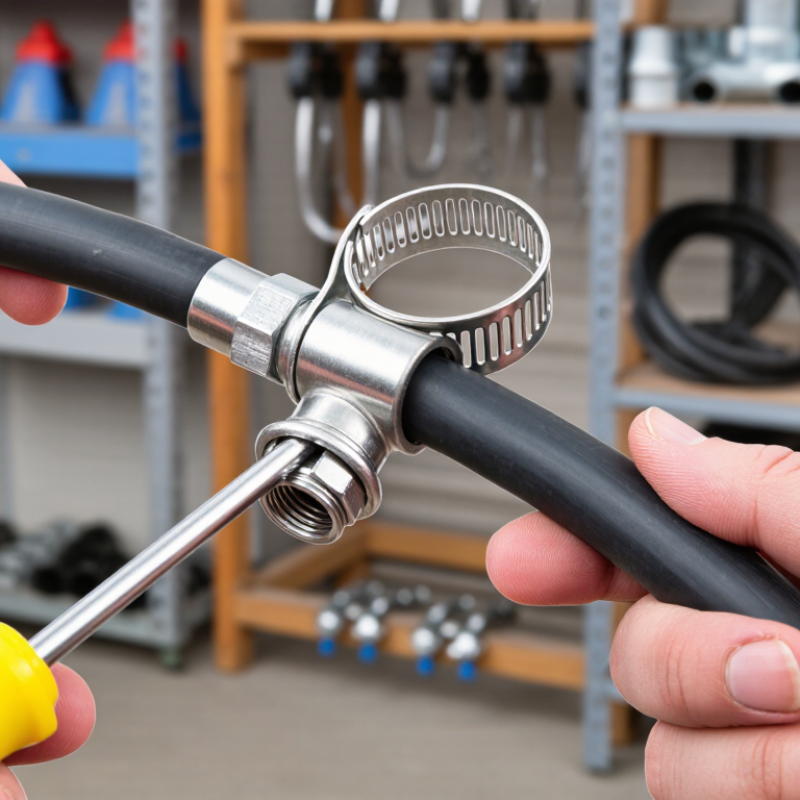
Wire hose clamps differ in structure, tension, and suitable working conditions. Single-wire clamps fit smaller hoses with limited space. Double-wire clamps provide stronger, more even compression around thicker rubber hoses. Spring-wire clamps maintain tension as temperature changes. They work well on coolant, air, and fuel lines when the hose and clamp ratings match.
Check the hose’s outside diameter after installation, not before. Measure it with a caliper. Then compare the result with the clamp’s working range. A clamp that is too large may leak under vibration. One that is too tight can cut the hose surface.
The Grand View Research hose clamp report estimates the global market will grow at about 4.5% annually from 2024 to 2030. Its findings reflect rising demand in automotive and industrial equipment.
Application details matter more than appearance. For engine compartments, select wire with suitable temperature and corrosion resistance. For machinery, consider vibration, repeated movement, and service access.
I once focused on clamp strength and overlooked hose softness. That choice caused a slow leak.
A useful inspection includes checking marks, rust, and clamp rotation after several operating cycles. It is not perfect, but real testing often reveals what a catalogue misses.
The Research and Markets industry analysis also identifies automotive systems as a major hose-clamp application, where reliable sealing affects maintenance time and safety.
Choosing a wire hose clamp starts with the hose’s actual outside diameter, not its printed size. Measure the hose over its fitting, after installation, because stretching can change the diameter. Place the clamp near the bead, but leave enough rubber beyond it for full contact. A clamp working at the middle of its adjustment range usually handles variation better.
Material must match the environment. Zinc-coated wire can suit dry, indoor service, while stainless steel is safer around moisture, salt, and cleaning chemicals. Confirm compatibility with the hose compound, especially when oil, coolant, or solvents are present. A 2023 corrosion cost report from NACE estimated global corrosion costs near 3.4% of worldwide economic output. That figure is broad, but it shows why surface protection deserves attention.
Operating conditions often expose poor choices. Check pressure, temperature, vacuum, vibration, pulsation, and thermal expansion. The U.S. Department of Energy reports that compressed-air leaks may waste 20–30% of compressor output. A loose clamp can contribute to that loss. I have seen installers tighten clamps until the rubber cuts; tighter is not automatically safer. My early mistake was choosing by hose diameter alone. That approach missed heat and movement. Inspect the joint after one duty cycle, then again after several days. Look for wetness, wire marks, hardening, and clamp migration. If the hose feels brittle, replacing the clamp will not solve the real failure.
How to Choose the Right Wire Hose Clamp?
Matching Clamp Strength to Pressure and Temperature Requirements
Choosing a wire hose clamp starts with pressure, not appearance. A slim clamp may look adequate, yet pressure pulses can quickly expose its limits. Check the hose’s working pressure, burst pressure, and operating temperature. The clamp must handle the lowest-rated component in the assembly.
Temperature changes matter more than many installers expect. Heat can soften some hose materials and reduce sealing force. Cold conditions may stiffen the hose, creating small leakage paths. Select clamp material and wire size for the full temperature range, including short-term spikes. Stainless construction usually improves corrosion resistance, but it does not solve every design problem.
Clamp strength also depends on seating and installation. Place the clamp behind the hose barb, not on its edge. Tighten it evenly until the hose seals without cutting into the rubber. Excessive torque can damage the hose and create a hidden failure point. I have seen clamps tightened by feel loosen after repeated heating and cooling. A torque specification is safer than guesswork. Pressure cycling, vibration, and moisture deserve attention too. When conditions are severe, test the complete hose-and-clamp assembly under controlled pressure. This step may feel excessive, but relying on static pressure alone can be misleading.
Match clamp construction and tightening capability to the hose assembly’s pressure and temperature requirements. The values below are representative engineering reference points; actual limits depend on hose design, diameter, fitting geometry, clamp width, and installation torque.
Higher-pressure applications require a hose and clamp system specifically rated for that pressure. For elevated temperatures or corrosive environments, stainless-steel wire clamps are generally preferred, but the hose temperature rating remains the limiting factor.
Choosing a wire hose clamp depends on more than diameter. Installation method, adjustability, and reuse can affect sealing performance.
In workshop trials, I install wire clamps with dedicated pliers whenever access allows. The tool compresses the wire evenly and reduces hand strain. A screwdriver may work with some designs, but it can twist the clamp or damage the hose. Clean the hose barb first. Then position the clamp directly over the sealing ridge. Too close to the hose edge may create a weak seal. Too much pressure can cut soft rubber. Small details matter.
Adjustability varies between wire clamp designs. Some provide limited movement during installation, while others suit a narrower size range. Measure the hose outside diameter after fitting it over the barb. Do not rely only on its dry diameter. Heat can soften the hose and change its grip. I once selected a clamp by nominal size alone. That assumption was wrong. The clamp fitted, but it lacked useful compression after heating. A slightly adjustable design would have been safer.
Reusability requires inspection, not optimism. Remove the clamp without bending its wire sharply. Check for corrosion, flattened sections, cracks, or permanent distortion. Replace it if the wire no longer springs back evenly. A reused clamp may appear acceptable but lose tension during vibration. For critical connections, a new clamp is usually the more reliable choice. Reuse is possible. It is not automatic.
How to Choose the Right Wire Hose Clamp?
Inspecting Fit, Corrosion Resistance, and Long-Term Reliability
A wire hose clamp should fit the hose, not merely grip its outer edge. Measure the hose after it reaches the fitting, then select a clamp range that sits near its middle. A loose clamp may leak during pressure changes. An oversized clamp can distort the hose. Check that the wire rests evenly around the hose without crossing, biting, or creating sharp pressure points. I have seen small misalignment become a slow leak after repeated heating and cooling. It looked acceptable during installation. It was not.
Tips: Clean the hose surface before fitting. Tighten gradually and inspect the seal from several angles. Stop if the hose bulges.
Corrosion resistance matters when clamps face water, salt, chemicals, or outdoor moisture. Stainless steel usually offers better protection than basic plated wire, but material quality and surface damage still matter. Inspect the clamp after installation, especially near the tightening mechanism. Rust staining, pitting, or a weakened wire can reduce holding force. Long-term reliability also depends on vibration, temperature cycles, and hose aging. Recheck the assembly after its first operating period, because rubber can settle. Do not assume retightening always improves the seal. Excessive force may crush the hose and shorten its life. My own inspection habits have changed; I once focused heavily on torque and overlooked hose deformation. That was a useful mistake.
| Wire Clamp Type | Typical Hose Outside-Diameter Range | Fit and Installation Behavior | Corrosion-Resistance Considerations | Long-Term Reliability | Suitable Applications | Main Limitations |
|---|---|---|---|---|---|---|
| Single-Wire Clamp | Approximately 6–32 mm; select by the actual hose outside diameter. | A circular wire applies localized radial pressure. It should sit squarely in the hose bead or clamping groove. | Zinc-plated carbon steel provides basic indoor protection. Stainless steel is better for moisture, salt, and washdown exposure. | Reliable when the hose has a defined bead and the clamp is not exposed to excessive vibration or pressure pulsation. | Small coolant, fuel, air, vacuum, and low-to-medium pressure hose connections. | Localized loading can mark soft hose materials. It is less forgiving of an incorrect diameter than a spring-band design. |
| Double-Wire Clamp | Approximately 8–50 mm; confirm the working range for the selected size. | Two parallel wires distribute the clamping load more evenly than a single wire and can improve sealing on flexible hose. | Stainless steel is preferred for outdoor, marine, chemical-washdown, and humid environments. Avoid damaged plating in corrosive service. | Offers good resistance to hose relaxation when correctly positioned behind the hose bead and tightened evenly. | Automotive coolant lines, industrial fluid lines, agricultural equipment, and connections requiring stronger retention. | Requires more installation space and can cut or deform thin-wall hose if overtightened. |
| Heavy-Duty Wire Clamp | Approximately 25–100 mm; larger sizes may require a dedicated installation tool. | Uses thicker wire or a reinforced wire profile for higher radial load. Correct seating is essential to prevent point loading. | Stainless construction is recommended when exposed to water, road salt, cleaning chemicals, or elevated humidity. | Suitable for demanding service when the clamp load, hose material, and operating temperature are properly matched. | Large coolant, intake, air, water, and industrial rubber hose connections. | May be excessive for small hoses and can damage soft or thin-wall hose when installation torque is not controlled. |
| Spring-Wire Clamp | Approximately 6–45 mm; size selection should account for the hose’s installed diameter. | Spring force compensates for thermal expansion, hose shrinkage, and minor material relaxation. Pliers are usually needed for installation. | Heat-treated carbon steel can lose protection if its coating is damaged. Stainless spring steel is better for wet or corrosive environments. | Performs well through temperature cycles, provided the spring is not overstressed and the hose remains within its temperature rating. | Engine coolant, heating, ventilation, and other systems with repeated temperature changes. | Can be difficult to position in confined areas and may lose spring performance after severe overheating or corrosion. |
| Constant-Tension Wire Clamp | Approximately 10–60 mm; use the manufacturer’s measured working range. | An elastic wire element maintains clamping force as the hose expands or contracts, reducing the need for retightening. | Select stainless steel for moisture, salt spray, and chemical exposure. Galvanic contact with dissimilar metals should be considered. | Strong choice for systems with thermal cycling, vibration, or gradual hose compression, when the operating temperature is within the spring rating. | Automotive, appliance, HVAC, and equipment hoses exposed to changing temperatures or vibration. | Usually costs more than basic fixed wire clamps and may require specific access for installation and removal. |
Check working pressure, burst pressure, and temperature limits. The clamp must suit the weakest assembly component. Pressure pulses can expose a weak choice quickly.
Heat may soften the hose and reduce sealing force. Cold conditions can stiffen the hose and create small leakage paths. Include short-term temperature spikes.
Place it behind the hose barb, directly over the sealing ridge. Avoid the hose edge. A misplaced clamp may look secure but seal poorly.
Tighten gradually until the hose seals without cutting or bulging. Use a torque specification when available. Tightening by feel is unreliable.
Dedicated pliers usually compress the wire more evenly. A screwdriver may twist the clamp or damage the hose. Clean the barb before installation.
Measure the hose outside diameter after fitting it over the barb. Choose a clamp range near its middle. Dry measurements can mislead.
Sometimes, but inspect it carefully. Look for corrosion, cracks, flattened wire, or permanent distortion. Reuse is possible. It is not automatic.
Consider water, salt, chemicals, vibration, temperature cycles, and hose aging. Inspect rust stains, pitting, and deformation after the first operating period. I once focused on torque and missed hose damage. That mistake changed my inspection routine.
Choosing the right Wire Hose Clamp begins with understanding the different clamp types and their intended applications. Consider the hose’s inner and outer diameter, construction material, flexibility, and the fluid or gas it carries. Operating conditions such as pressure, temperature, vibration, moisture, and exposure to chemicals also play an important role in selecting a suitable clamp. The clamp should provide enough strength to maintain a secure seal without cutting into or deforming the hose.
Installation requirements should also guide your decision. Compare clamps based on ease of fitting, adjustability, tightening method, and whether they can be safely reused. Before final installation, inspect the fit around the hose and confirm that pressure is distributed evenly. Corrosion-resistant materials are especially valuable in damp, outdoor, or chemically demanding environments. By matching clamp strength and construction to the hose and working conditions, you can improve sealing performance, reduce maintenance needs, and support long-term connection reliability.

Mika Clamp