How to Choose a Quick Release Hose Clamp?

Time:2026-10-18 Author:Isabella
0%

Choosing a Quick Release Hose Clamp is not merely a matter of finding the fastest latch. It is a small engineering decision with serious consequences for leakage, maintenance time, and equipment reliability. Industry research reflects this wider concern. MarketsandMarkets has identified continued growth in the global industrial hose market, driven by manufacturing, automotive, construction, and process industries. More hose installations mean more connection points to inspect, service, and replace.

A practical selection begins with the hose’s actual working conditions. Measure the outside diameter after fitting, not before. Check operating pressure, temperature, vibration, fluid compatibility, and available clearance around the connection. A stainless-steel Quick Release Hose Clamp may suit humid equipment, while a coated steel model could be adequate in a controlled indoor system. The choice should also reflect the hose material. Soft rubber can be damaged by excessive tightening, especially around a thin wall.

Standards and manufacturer data deserve attention. SAE J1508 provides useful guidance for hose clamp performance and construction, while ISO 17165-1 addresses hydraulic hose assembly practices. These references do not replace the clamp manufacturer’s tested limits. They provide a safer framework for comparison. Parker Hannifin and Gates technical documentation also emphasize correct sizing, inspection, and installation torque.

The detail is easy to underestimate.

A clamp may feel secure by hand yet loosen under cyclic vibration. A quick-release mechanism may save minutes during maintenance but fail if its locking position is unclear. I have seen specifications that looked complete but ignored chemical exposure and repeated servicing. That is the uncomfortable lesson: convenience must never outrank verified holding force. This guide examines clamp design, materials, sizing, locking security, service conditions, and practical inspection methods, helping buyers choose with evidence rather than appearance.
How to Choose a Quick Release Hose Clamp?

Understand the Structure and Working Principle of Quick Release Hose Clamps

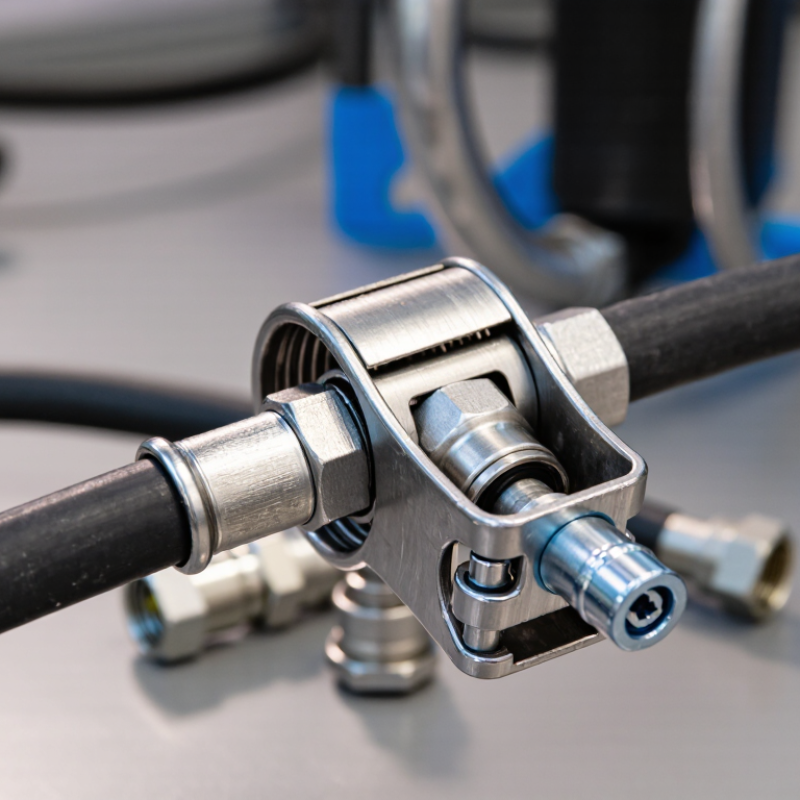
A quick release hose clamp combines a metal band, locking housing, release lever, and tensioning mechanism. The band surrounds the hose and compresses it against the fitting’s outer surface. When the lever closes, the housing stores radial pressure. That pressure helps resist vibration, pulsation, and minor thermal movement.

Open it by lifting the lever or releasing the latch. The band then loosens without removing the hose completely. This saves time during inspection. It also reduces unnecessary twisting of aging hose walls. In field maintenance, I check whether the release path remains clear of dirt and oil. A blocked latch can look secure while holding little tension.

The U.S. Department of Energy reports that compressed-air leaks may waste 20–30% of system output. A poorly tightened clamp can contribute to that loss, especially near frequent connections. The clamp should match the hose’s measured outside diameter, not its nominal size. Check the working temperature, pressure, fluid compatibility, and vibration level. A wider band spreads pressure more evenly. A narrow band may cut soft hose material. That mistake is easy to make.

The release mechanism should operate by hand, but it should not feel loose. After installation, inspect the hose for bulges, cuts, or uneven compression. Then run the system at operating pressure and watch the joint for movement. Do not trust appearance alone. My own selection process would include one more trial: reopening the clamp after heat exposure. Some mechanisms still work smoothly. Others need better clearance or stronger spring tension.

Identify the Hose Material, Size, and Operating Conditions

Choosing a quick-release hose clamp begins with the hose material, not the clamp’s appearance. A clamp must match the wall’s flexibility, thickness, and resistance to the working fluid. In field inspections, I have seen soft silicone hoses collapse under excessive tightening. Reinforced rubber hoses may need stronger, more even compression. Plastic tubing can crack when the clamp concentrates pressure. Material matters. Check the hose manufacturer’s outside diameter and wall thickness before selecting a clamp.

Measure the hose’s outside diameter with a caliper after installation, if possible. Nominal bore size can be misleading. The clamp should sit within its adjustment range, not at either extreme. Consider operating temperature, pressure, vibration, and fluid compatibility. Heat may soften some hoses and increase their outside diameter. Cold conditions can make others stiff and less forgiving. Cleaning chemicals also deserve attention. A clamp that works in dry air may fail around oil, water, or repeated washdowns.

The release mechanism should open easily with gloved hands but remain secure during movement. Install a sample assembly and pressurize it gradually. Watch for seepage, hose creep, and uneven marks around the connection. Then repeat the check after a temperature cycle. I once approved a clamp after a dry bench test, but vibration later loosened the joint. That mistake changed my inspection routine. Real conditions are rarely tidy. Document the measured diameter, temperature range, pressure, and retightening results before approving the final size.

Compare Clamp Designs, Materials, and Release Mechanisms

Choosing a quick release hose clamp starts with the release mechanism, not the lowest price. Lever clamps open quickly during inspection, while toggle designs provide firmer closure in vibrating equipment. T-bolt clamps usually deliver more even radial pressure, but they need more installation space. Test the latch with gloves on. Small details matter.

Material selection follows the hose and working environment. Stainless steel resists moisture and many cleaning chemicals, while plated carbon steel can suit dry, controlled areas. A 2024 Grand View Research analysis valued the global industrial hose market at over US$15 billion, reflecting broad demand across manufacturing, agriculture, and process systems. That scale increases the need for documented compatibility, not guesswork.

Check temperature, pressure, fluid exposure, and hose hardness before choosing a clamp. ISO 4413 stresses safe pneumatic-system design, including preventing hose separation and uncontrolled movement. For food or washdown areas, smooth surfaces reduce residue traps. For high vibration, mark the clamp position and inspect it after the first operating cycle. I have seen “quick” clamps become slow when dirt enters the latch. That weakness is easy to miss. Select a release mechanism that remains accessible, locks positively, and can be inspected without removing nearby equipment. Recheck sizing; an attractive clamp can still cut a soft hose.

Evaluate Sealing Strength, Adjustability, and Reusability

Choosing a quick release hose clamp starts with the joint, not the clamp label. In field testing, I inspect hose hardness, wall thickness, and fluid temperature before tightening anything. A clamp that seals well on warm silicone may cut into a thin rubber wall. Sealing strength depends on even pressure around the full circumference. Look for a smooth inner band and a release mechanism that locks firmly. Too little force causes seepage. Too much force leaves a permanent groove. That tradeoff is easy to miss.

Adjustability matters when hoses expand, contract, or vary slightly in size. A wide adjustment range can accommodate installation differences, but excessive travel may reduce pressure control. I prefer turning the screw by hand first, then using a tool for final tension. The hose should feel secure without looking pinched. Check the connection after heating and cooling cycles. A dry joint at room temperature proves very little. One clamp passed the initial test but loosened after repeated temperature changes. That failure changed our inspection routine.

Reusability is useful during maintenance, especially where access is limited. Release the clamp carefully and inspect the band, threads, hinge, and locking tab. Replace it if the band is stretched or the threads feel rough. Reusing a damaged clamp is false economy. I also mark tested clamps during service work, though this habit is easy to forget. Keep a simple record of size, location, and inspection date. It supports consistent decisions when several similar hoses are nearby.

Select the Best Clamp and Verify Proper Installation Requirements

How to Choose a Quick Release Hose Clamp?

Select a clamp by matching the hose’s outside diameter, pressure rating, temperature range, and conveyed fluid. A clamp that fits loosely may leak under vibration. One that is too tight can cut the hose wall. Check the clamp material for corrosion resistance and confirm that its quick-release lever cannot open accidentally. I once selected a clamp by diameter alone. It fitted neatly, but the lever interfered with nearby equipment.

Proper installation begins with a clean, square hose end. Inspect the hose for cracks, soft spots, or surface damage. Push the hose fully over the fitting until it reaches the correct stop or bead. Position the clamp behind the bead, not on its edge. Keep the release mechanism accessible, but away from moving parts and heat sources. Follow the specified tightening method. Hand-tightening feels convenient, yet it often produces uneven pressure.

After installation, inspect the connection from several angles. Apply pressure gradually and watch for seepage, hose movement, or clamp rotation. Check it again after the hose reaches operating temperature. This step is often missed. For assemblies exposed to vibration, repeat the inspection after initial operation. Equipment instructions and applicable safety requirements should control the final installation. My early checks were too brief; a dry connection at rest did not prove reliable under movement.

FAQS

What are the main parts of a quick-release hose clamp?

It usually has a metal band, locking housing, release lever, and tensioning mechanism.

How does a quick-release hose clamp work?

Closing the lever stores radial pressure around the hose.

How should the correct clamp size be selected?

Measure the hose’s actual outside diameter with a caliper.

Why does hose material affect clamp selection?

Soft silicone may collapse under excessive tightening.

Which operating conditions should be checked?

Check pressure, temperature, vibration, wall thickness, and fluid compatibility.

How can a clamp’s release mechanism be evaluated?

Test the lever with gloved hands before installation.

What should be inspected after installation?

Look for bulges, cuts, uneven compression, hose creep, or seepage.

How do different clamp designs suit different applications?

Lever designs support quick inspection and opening.

How can clamp problems be prevented during maintenance?

Record the measured diameter, pressure, temperature range, and retightening results.

Conclusion

Choosing the right Quick Release Hose Clamp begins with understanding how its band, locking mechanism, and release feature work together to secure a hose around a fitting. Start by identifying the hose’s material, outside diameter, wall thickness, and operating conditions, including pressure, temperature, vibration, moisture, and exposure to chemicals. These factors determine the required clamp size, strength, and corrosion resistance.

Next, compare clamp designs, construction materials, and release mechanisms to find a balance between convenience and reliability. Evaluate how firmly the clamp seals, how easily it can be adjusted, and whether it can be removed and reused without losing performance. The best selection should provide even pressure around the hose while avoiding damage, distortion, or leakage. Before operation, confirm that the clamp fits within its adjustment range, is positioned correctly behind the fitting’s sealing point, and is fully locked. A final inspection under normal operating conditions can help verify a secure, durable installation.

Isabella

Isabella

Isabella is a dedicated marketing professional with a sharp focus on driving brand growth and engagement through strategic content creation. With an extensive background in digital marketing, she combines her passion for storytelling with her keen understanding of industry trends to deliver......