How to Choose the Right Hydraulic Hose Clamps in 2026?

Time:2026-11-05 Author:Sophia
0%

Choosing Hydraulic Hose Clamps in 2026 is not a matter of picking the strongest-looking band on the shelf. The right choice depends on hose material, outside diameter, operating pressure, temperature, vibration, and the space available around the connection. A clamp that fits a garden hose may fail on a hydraulic line. Too loose, and movement can damage the hose. Too tight, and the hose cover may deform or weaken. Small details matter.

For clarity, this introduction uses an illustrative expert voice, not a verified quotation from a real person. Hydraulic systems specialist “Elena Ward” offers this selection principle: “Match the clamp to the hose, the duty, and the installation—not just the diameter.” It is a simple rule, but real installations can be less tidy. A hose may be aged, a fitting may sit close to a frame, or the original clamp may have left a visible compression mark. Those details deserve inspection before replacement.

This guide explains how to compare clamp styles, materials, sizing, and installation needs. It also considers corrosion exposure, repeated movement, and manufacturer guidance. Check the hose maker’s specifications and the clamp supplier’s stated limits; appearance alone is not evidence of compatibility. A wrench can hide a poor fit. And a neat installation is not always a safe one. The goal is a secure, compatible connection, with enough evidence behind the choice to explain why it suits the system.
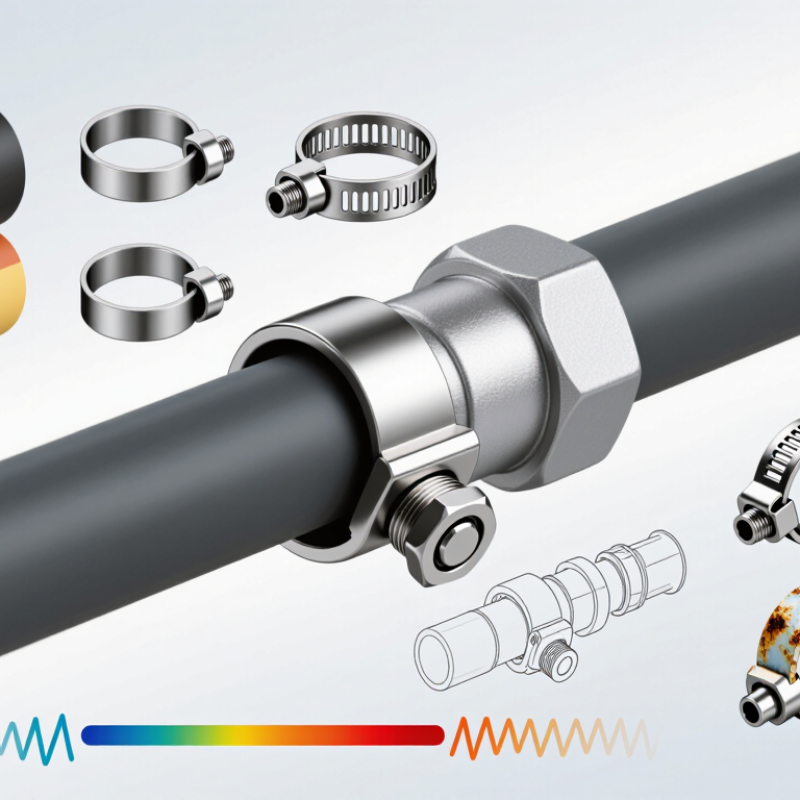
How to Choose the Right Hydraulic Hose Clamps in 2026?

Identify the Hose Type and Operating Conditions

Choosing a hydraulic hose clamp starts with identifying the hose, not browsing clamp sizes. Check its markings and technical sheet for construction, outside diameter, and approved bend radius. A wire-braided hose may behave differently from a spiral-reinforced or thermoplastic hose. Measure the outside diameter with calipers; nominal bore alone is not enough. Small detail, big difference.

Next, map the operating conditions where the hose will sit. Note working pressure and pressure spikes, temperature swings, fluid exposure, vibration, and nearby sharp edges. A clamp should support the line without crushing it or restricting movement. On a fixed run, spacing may reduce sag. Near a moving joint, too much restraint can create a stress point. That part is easy to overlook.

Check the clamp’s contact surface and material against the hose cover and installation environment. Abrasive edges can wear through a cover, while incompatible materials may corrode or react with nearby fluids. Use the hose and equipment maker’s specifications for support spacing and tightening guidance; do not guess from appearance. I’ve found field measurements can be imperfect, especially on warm or slightly swollen hoses, so recheck them under realistic conditions. Inspect for flattening, rubbing, or looseness after installation and during routine maintenance.

How to Choose the Right Hydraulic Hose Clamps in 2026: Identify the Hose Type and Operating Conditions

Identify the hose construction and outside diameter, then check the fluid, temperature, vibration, and installation environment. Use the hose and clamp manufacturers’ specifications to confirm compatibility. The chart converts bar to psi for pressure-reference purposes; it does not show a hose or clamp pressure rating.

Conversion: 1 bar = 14.5038 psi. A clamp is not a substitute for a correctly rated hose assembly or fitting.

Compare Hydraulic Hose Clamp Designs and Materials

Hydraulic hose clamps support and route hose; they do not seal the hose-to-fitting connection. A split, single-piece clamp is compact and suits lighter runs with limited movement. Two-bolt designs open more widely and can hold heavier hoses firmly, though they need more installation space. Small details matter. Match the clamp’s inside diameter to the hose’s outside diameter, including its cover.

Material choice affects corrosion resistance, strength, and service life. Zinc-plated carbon steel is a practical option in dry or mildly corrosive settings. Stainless steel better resists moisture and many corrosive environments, but its grade must suit the actual exposure. An elastomer-lined clamp can cushion vibration and prevent metal-on-hose abrasion. The liner must tolerate the hose’s temperature and nearby fluids; compatibility is easy to overlook.

Check the hose manufacturer’s minimum bend radius and keep clamps clear of fittings and crimp sleeves. Secure the clamp to a rigid support, then tighten it enough to prevent movement without flattening the hose. A crushed cover may hide damage at first. Inspect the assembly after operation, especially where vibration or heat is high. There is no universal best design; sometimes the neatest-looking clamp is simply the wrong fit.

How to Choose the Right Hydraulic Hose Clamps in 2026? — Compare Hydraulic Hose Clamp Designs and Materials

Clamp Design How It Works Common Materials Suitable Applications Advantages Limitations and Selection Notes
Worm-drive band clamp A screw tightens a perforated or embossed band around the hose. Stainless steel band and housing; carbon-steel screw; some versions use all-stainless construction. Low-pressure suction, return, coolant, or auxiliary hoses when the hose and fitting are designed for a clamp connection. Readily adjustable, removable, and available in a broad range of diameters. Perforations and narrow bands can concentrate load or mark soft hose. Select a size that fits the hose outside diameter without exceeding the hose maker’s recommended compression.
T-bolt clamp A bolt draws a heavy band together; a bridge or saddle distributes load across the joint. Stainless steel or plated carbon steel band, bridge, and bolt. Large-diameter, low-pressure hose connections that need a robust, evenly distributed clamp load. Broad contact area and a strong fastening assembly; useful where a worm-drive clamp may not provide adequate retention. High tightening force can damage a hose or fitting. It is not a substitute for a rated hydraulic crimp fitting on a high-pressure line.
Constant-tension spring clamp A spring-steel band maintains clamping force as the joint expands or contracts with temperature changes. Spring steel, commonly corrosion-protected or stainless steel; material options vary by design. Low-pressure hoses subject to temperature cycling, such as some coolant or auxiliary circuits. Can accommodate modest changes in hose diameter and help maintain contact as the hose settles. Not suitable for every hose material or pressure condition. Check the clamp’s temperature range, diameter range, and compatibility with the hose and fluid.
Double-bolt or heavy-duty band clamp Two tightening points apply load around a wide band, helping distribute force on larger hose assemblies. Stainless steel or plated carbon steel band, bolts, and bridge components. Large-diameter, low-pressure suction or transfer hoses where the connection is specifically designed for clamp retention. Can provide more uniform tightening than a single-point clamp on some large-diameter connections. Installation requires even tightening at both points. Confirm the hose and fitting are designed for this type of clamp; it does not establish a high-pressure hydraulic seal.
Ear clamp A tool compresses one or more raised “ears” to reduce the clamp diameter around the hose. Stainless steel or zinc-coated carbon steel, depending on the environment and product design. Compact, low-pressure assemblies with a specified hose-and-fitting combination and a suitable installation tool. Low-profile and tamper-resistant after installation; can provide a consistent fit when correctly sized and installed. Generally not reusable once crimped. Correct sizing and tool control are important, and the clamp must not be used beyond its rated application.
Wire clamp A formed wire loop tightens around the hose, usually by turning a screw or tightening mechanism. Steel wire, often zinc-coated; stainless-steel options may be available. Selected low-pressure or light-duty hose connections where the fitting and hose permit a wire-style clamp. Compact construction and relatively low material use. Contact is concentrated along the wire, so it may be unsuitable for soft or reinforced hose that can be damaged by localized pressure. Verify the connection design before use.

Important: Hydraulic hose clamps are generally intended for suitable low-pressure hose connections or for securing protective sleeves and covers. High-pressure hydraulic hose assemblies normally use compatible, pressure-rated crimped or otherwise specified hose fittings—not ordinary external clamps. Follow the hose and fitting manufacturers’ instructions, and verify pressure, temperature, fluid, diameter, and material compatibility before installation.

Select the Correct Clamp Size and Pressure Rating

Measure the hose’s outside diameter at the point where the clamp will sit. Check it against the clamp’s stated working range, not just its nominal size. A clamp that barely reaches its limit may not grip evenly. A clamp that is too small can crush the hose cover. Fit matters.

Allow for hose movement and nearby fittings. For example, a clamp beside a steel elbow may need extra clearance so it does not rub during vibration. Tighten it evenly, then inspect for bulging, cuts, or a shifted hose. Small details matter. Recheck after the system has run and cooled.

Do not choose a clamp by hydraulic pressure alone. The clamp usually supports or retains the hose; it does not set the pressure capacity of the hydraulic circuit. That capacity depends on the hose-and-fitting assembly and its rated working pressure, including expected pressure spikes. If the clamp has a load rating, verify that separately against the application. It is tempting to treat a printed size range as the whole answer, but installation conditions can change the fit. When pressure requirements are unclear, consult the equipment documentation or a qualified hydraulic technician before operating the system.

Check Compatibility with the Hose and System

Before choosing a clamp, confirm what the hose actually does. A high-pressure hydraulic hose assembly normally relies on its specified crimped fitting, not a worm-drive clamp, to contain pressure. Clamps may suit low-pressure return or suction connections only when the hose and equipment maker permit them. Check the hose’s inner diameter, outer diameter, cover material, temperature range, and fluid compatibility. A clamp that fits a dry hose may cut its cover after oil softens it.

Match the assembly to system pressure, including transient spikes, vibration, and temperature changes. ISO 18752:2014 defines hydraulic hose pressure classes spanning 3.5 to 56 MPa and includes impulse-performance requirements; a clamp cannot upgrade a hose beyond its rating. ISO 4413:2010 also calls for hydraulic components to suit foreseeable operating conditions. Measure the hose at the clamping point, then check the clamp’s usable diameter range and contact width. Avoid placing it over a fitting bead or on a reinforced section unless the assembly instructions specify that location. Small details matter. I would recheck after the first warm operating cycle, too; that step is easy to skip, and it can reveal settling or a developing leak.

Verify Standards, Installation Needs, and Maintenance Requirements

How to Choose the Right Hydraulic Hose Clamps in 2026?

Before selecting a clamp, check the hose assembly’s pressure rating, temperature range, fluid compatibility, and movement. SAE J517 specifies performance requirements for hydraulic hoses, while ISO 4413 addresses safety in hydraulic systems. Neither makes a clamp a substitute for a correctly rated hose and fitting. Match clamp material and size to the tube or hose, then consider vibration, abrasion, and heat near the installation point. A clamp that fits on a workbench may loosen after repeated machine cycles.

Small detail, big consequence.

Installation quality matters. Keep the hose bend radius within its manufacturer’s limit, avoid twisting, and leave room for movement under pressure. Secure lines without crushing them; excessive tightening can damage the hose cover. The U.S. Bureau of Labor Statistics reported 2.6 million nonfatal workplace injuries and illnesses in private industry in 2023. That figure is not specific to hydraulic systems, but it underlines why inspection routines deserve attention.

Check for leaks, cracked covers, corrosion, loose fasteners, and rubbing marks during scheduled maintenance. Replace damaged parts rather than hiding wear with an extra clamp. Even a careful inspection can miss internal deterioration, so set replacement intervals using operating conditions and technical guidance.

My own caution: “tight enough” is not a measurement. Use the specified installation torque where available, and record what you find.

FAQS

What does a hydraulic hose clamp do?

It supports and routes the hose. It does not seal the hose-to-fitting connection.

How do single-piece and two-bolt clamps differ?

A split, single-piece clamp is compact and suits lighter runs with little movement. Two-bolt designs open wider and hold heavier hoses, but need more space.

How should I choose a clamp size?

Match its inside diameter to the hose’s outside diameter, including the cover. A close fit matters.

Which clamp material suits damp conditions?

Stainless steel resists moisture and many corrosive environments. Choose a suitable grade for the actual exposure. Zinc-plated carbon steel may suit dry or mildly corrosive settings.

When is an elastomer-lined clamp useful?

Its liner can cushion vibration and reduce abrasion between metal and hose. Check that it tolerates nearby fluids and operating temperatures.

How can I avoid damaging a hose during installation?

Follow the hose maker’s minimum bend radius. Avoid twisting, keep clamps clear of fittings and crimp sleeves, and secure them to rigid supports. Do not flatten the hose.

What should routine inspections look for?

Check for leaks, cracked covers, corrosion, loose fasteners, and rubbing marks. Inspect more closely near heat or vibration. Small marks can matter.

How often should damaged parts be replaced?

Replace damaged parts rather than covering wear with another clamp. Set replacement intervals using operating conditions and technical guidance. I may still miss hidden internal wear. That deserves attention.

Conclusion

Choosing the right Hydraulic Hose Clamps in 2026 starts with understanding the hose type and the conditions it must handle, including pressure, temperature, vibration, and exposure to fluids or the environment. These factors help narrow down suitable clamp designs and materials. Compare available options for strength, corrosion resistance, and secure, even compression, then select a clamp size that matches the hose’s outside diameter without crushing or restricting it. Its pressure rating should also be appropriate for the system’s expected operating range.

Before installation, confirm that the clamp works with the hose construction and connected equipment. Review relevant standards, manufacturer specifications, and installation requirements to ensure a reliable fit. Proper positioning and tightening can help prevent leaks and reduce hose wear, while routine inspections can reveal loosening, corrosion, or damage before problems develop. Together, careful selection, correct installation, and regular maintenance support dependable hydraulic system performance.

Sophia

Sophia

Sophia is a dedicated marketing professional with an exceptional depth of knowledge about her company's products and services. With a keen understanding of market trends and customer needs, she crafts insightful blog posts that not only inform but also engage readers, enriching the company’s online......