7 Best Metal Hose Clamps for Industrial Use?

Time:2026-09-28 Author:Charlotte
0%

A Metal Hose Clamp looks simple: a steel band, a screw or bolt, and a firm seal around a hose. In industrial service, that small connection can face vibration, pressure changes, moisture, chemicals, and repeated maintenance. A clamp that loosens or corrodes may allow leakage, interrupting work and creating costly cleanup. Small part. Serious consequences.

The U.S. Department of Energy’s guide to compressed-air systems reports that leaks can waste 20–30% of compressor output in poorly maintained systems. That figure concerns entire compressed-air networks, not clamps alone, but it shows why every connection deserves attention. Choosing a clamp means matching its material, band design, tightening method, and size to the hose and operating conditions. Stainless steel may resist corrosion, while a wider band can help distribute pressure. Neither feature guarantees a reliable seal by itself.

This guide compares seven metal hose clamps for industrial use, focusing on practical fit, durability, adjustability, and application limits. SAE J1508 provides performance requirements for certain hose clamps, but buyers should verify whether a product and its intended use fall within the standard’s scope. A rating on a product page is not a substitute for checking specifications. We also need to be cautious: no single clamp suits every hose, fluid, or environment. The best choice is the one that fits the assembly, follows the manufacturer’s installation guidance, and holds up under real operating conditions.
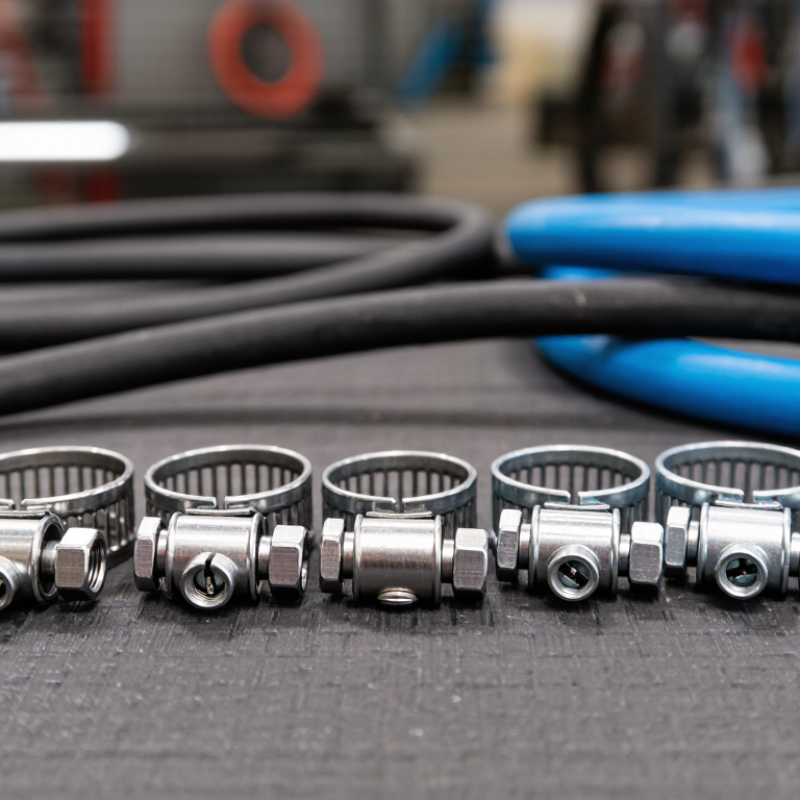
7 Best Metal Hose Clamps for Industrial Use?

Understanding Metal Hose Clamps and Their Industrial Uses

Metal hose clamps secure flexible hoses to pipes, fittings, and equipment under changing pressure and vibration. Their simple design hides an important job: maintaining enough grip to limit leaks without cutting or crushing the hose. In industrial settings, that balance matters around pumps, compressors, coolant lines, and air systems. Small details matter.

Clamp materials should suit the operating environment. Stainless steel can resist corrosion in damp or washdown areas, while other metals may work in cleaner, less demanding conditions. Check the hose material, fluid temperature, pressure range, and exposure to chemicals before choosing a clamp. A clamp that looks robust may still fail if its material or size is poorly matched.

Width, band shape, and tightening method also affect performance. A smooth, broad band can spread pressure more evenly across a soft hose. The clamp should sit behind the fitting’s raised edge, then be tightened to the hose maker’s guidance. Too little tension can allow slipping; too much can deform the hose and restrict flow. It is easy to focus only on clamp strength. Fit and installation deserve equal attention, and they are sometimes overlooked during routine maintenance. Inspect for rust, loose fasteners, cracked hoses, and signs of leakage. A quick visual check helps, but it cannot replace scheduled maintenance or a pressure test where required.

Key Materials and Designs in Metal Hose Clamps

Metal hose clamps are selected by more than diameter. The material must suit the hose, fluid, temperature, and surrounding conditions. Stainless steel often resists moisture and washdown better than plated carbon steel, while carbon steel may suit dry, protected equipment. Check the stated alloy and coating; a shiny surface alone proves little. Also consider contact between dissimilar metals, which can encourage corrosion in damp settings. Small detail. Big consequence.

Design affects how evenly a clamp holds. A worm-drive clamp adjusts through a slotted band and works well for many general connections. T-bolt designs typically provide stronger, more uniform compression on larger or reinforced hoses. Wide bands spread pressure over more hose surface, while smooth, rolled edges help reduce cuts. A narrow band can still work, but it may leave a visible crease if overtightened. There is no universal best design.

In practice, measure the hose over its fitting, then choose a clamp whose working range includes that measurement. Tighten gradually and follow the equipment maker’s torque guidance; more force is not automatically safer. After operation, inspect for seepage, band movement, or hose damage, especially where vibration is present. One limitation is easy to overlook: even a well-made clamp cannot correct a mismatched fitting or worn hose.

How to Choose a Clamp for Pressure, Temperature, and Hose Type

A metal hose clamp should match the working conditions, not just the hose diameter. Measure the hose over its fitting, then check the clamp’s stated range. A clamp that bottoms out may feel secure but still apply uneven pressure. Measure twice.

Pressure matters, especially when the line pulses or vibrates. For demanding service, compare the clamp’s rated load and construction with the equipment maker’s guidance; do not assume a wider band is automatically stronger. Temperature can also change the hose material and clamp tension. Check the full operating range, including brief heat spikes, and choose a metal grade suited to moisture or chemicals around the line. Small details count.

Hose type guides the contact design. A soft rubber hose may need a smooth, broad band to reduce cutting, while reinforced or thicker hose may require a clamp built for higher tightening force. On ribbed or corrugated hose, confirm that the clamp fits the profile and does not crush the reinforcement. I have seen selection discussions focus too much on bolt size. That is easy to do. Still, installation matters: tighten evenly, follow the specified torque when available, and inspect for leaks or hose damage after the system reaches operating conditions. A quick visual check cannot replace a pressure test, but it can reveal a poor fit early.

Seven Metal Hose Clamp Types for Industrial Applications

Seven Metal Hose Clamp Types for Industrial Applications

Industrial hose connections face vibration, pressure changes, heat, and occasional maintenance. The right clamp depends on the hose, operating conditions, and access around the joint. Fit matters most. A clamp that looks sturdy can still damage soft hose if overtightened.

Clamp types

Worm-drive clamps use a slotted band and screw, making field adjustment straightforward.
T-bolt clamps provide broad, strong clamping for larger hoses and higher-vibration service.
Constant-tension clamps use spring action to respond to temperature shifts.
Spring-band clamps offer similar movement on smaller connections, though their force and size must suit the hose.
Double-bolt clamps tighten at two points and can help distribute force around large-diameter hoses.
Quick-release clamps simplify repeated inspection or hose changes, but their locking hardware needs regular checks.
Ear-style clamps create a compact, often permanent connection; installation requires the correct tool, and removal may damage the clamp.

Material matters, too.

Stainless steel can resist corrosion in damp or washdown areas, while the hose itself must tolerate the fluid and temperature. Check the manufacturer’s pressure and diameter guidance rather than choosing by appearance. Small details count. A clamp positioned over a hose seam, for example, may seal poorly. Even a correctly selected clamp can loosen under severe vibration, so inspect connections during scheduled maintenance.

Installation, Inspection, and Maintenance of Hose Clamps

A metal hose clamp is only as reliable as its fit, installation, and inspection. Match the clamp’s diameter range and material to the hose, fluid, temperature, and operating environment. SAE J1508 provides performance-test methods for hose clamps, but it does not offer one universal installation torque for every assembly. Follow the clamp and hose manufacturers’ specifications; overtightening can cut soft hose covers, while under-tightening may allow leakage or slippage. Small details matter. Keep the band square, position it behind the hose bead where applicable, and tighten it evenly with a calibrated tool.

Inspect clamps before installation and during scheduled maintenance. Look for corrosion, cracked welds, bent bands, damaged screw threads, and hose swelling or hardening beneath the band. Check again after the system reaches operating temperature and pressure, following the equipment maker’s procedure. Never tighten a pressurized assembly. For hose assemblies, ISO 1402:2021 describes hydrostatic test methods; use the pressure and acceptance criteria specified by the applicable hose standard or manufacturer, not an improvised test value.

Record inspection dates, observed defects, and replacements. A simple log helps reveal recurring loosening or corrosion in one service area. One awkward reality: a clean-looking clamp can still be damaged underneath the hose. If inspection requires disturbing a critical assembly, replace the clamp and assess the hose rather than trusting appearance alone.

7 Best Metal Hose Clamps for Industrial Use? - Installation, Inspection, and Maintenance of Hose Clamps

Clamp Type Typical Construction Best Suited For Installation Guidance Inspection and Maintenance Key Considerations
Heavy-Duty Worm-Drive Clamp Metal band with a screw-driven housing; commonly available in stainless steel or coated steel. General industrial hose connections where an adjustable, removable clamp is useful. Choose a size that fits the hose and fitting. Position the band over the fitting’s barb or sealing area, then tighten evenly using the specified tool and torque. Check for band damage, corrosion, screw slippage, and leaks. Recheck after initial operation if the hose manufacturer recommends it. Easy to adjust, but tightening beyond the hose or clamp maker’s guidance can damage the hose or reduce sealing performance.
T-Bolt Clamp Wide band secured by a T-shaped bolt and nut, often with a spring or bridge section. Larger-diameter or higher-vibration hose assemblies when a robust, more uniform clamping arrangement is required. Center the band on the fitting, keep it square to the hose, and tighten the nut to the clamp manufacturer’s specified torque. Inspect the bolt, nut, band, and any spring section for corrosion, fatigue, looseness, or distortion; check the joint for leakage. Select by actual hose outside diameter and operating conditions. Do not assume all T-bolt clamps have the same pressure or torque capacity.
Constant-Tension Spring Clamp Spring steel band designed to maintain clamping force as the hose diameter changes with temperature. Applications with temperature-related hose expansion and contraction, where the hose and fitting are compatible with this clamp style. Use the specified clamp diameter and suitable pliers or installation tool. Place it correctly over the connection before releasing it into position. Check for loss of spring action, corrosion, cracks, displacement, and signs of leakage. Replace a damaged or weakened clamp. Clamp performance depends on the intended temperature range and hose design; verify suitability with the assembly specifications.
Spring-Band Hose Clamp Resilient formed-metal band that applies pressure through its spring action. Smaller hose connections and systems where a compact, self-adjusting clamp is specified. Compress the clamp with the correct tool, slide it into the designated position, and release it without twisting or damaging the hose. Look for corrosion, permanent deformation, cracks, poor seating, and leakage; confirm that the clamp remains positioned over the sealing area. Its usable size range and clamping force are design-specific. It is not a universal substitute for a bolted clamp.
Ear (Stepless) Clamp Formed metal band with one or more ears that are crimped to close the clamp; some designs provide a nearly continuous inner surface. Permanent or semi-permanent hose assemblies where a compact, consistent installation is desired. Use the correct ear-clamp pincers and clamp size. Position the clamp, then crimp the ear according to the clamp maker’s instructions; avoid improvised tools. Inspect for a properly formed ear, band damage, corrosion, hose cuts, and leakage. Replacement is generally required if the clamp is removed or damaged. Typically less convenient to adjust or reuse than screw clamps. Confirm that the clamp profile suits the hose and fitting.
Double-Bolt High-Torque Clamp Heavy band tightened by two bolts, often with a bridge or saddle that distributes load. Large or reinforced industrial hoses that require a heavy-duty, serviceable bolted clamp arrangement. Center the clamp evenly and tighten both bolts progressively and alternately to the specified torque to help maintain even loading. Check both fasteners for loosening, thread damage, corrosion, and uneven band loading; inspect the hose beneath accessible edges for damage. Requires adequate clearance for the hardware. Use only where the hose, fitting, and clamp specifications support the application.
Perforated-Band Worm-Drive Clamp Adjustable screw clamp with perforations or slots in the band; materials and edge treatments vary by design. General-purpose connections where broad adjustment is needed and the hose is compatible with the band design. Match the clamp range to the measured hose diameter. Keep the band aligned and avoid placing perforations or sharp edges where they could cut or pinch the hose. Inspect band edges, slots, screw engagement, corrosion, and hose surface for wear or cuts. Replace clamps showing damage or slipping. Band construction varies. For soft, thin-walled, or reinforced hose, check whether a smooth inner band or a different clamp style is required.

FAQS

What should guide the choice of a metal hose clamp?

Match the clamp material to the hose, fluid, temperature, and surroundings. Stainless steel often resists moisture and washdown better than plated carbon steel. A shiny surface proves little.

How do I choose the correct clamp size?

Measure the hose over its fitting, then check the clamp’s stated working range. If the clamp bottoms out, pressure may be uneven. Measure twice.

What is the difference between worm-drive and T-bolt clamps?

Worm-drive clamps adjust through a slotted band and suit many general connections. T-bolt designs often provide more uniform compression on larger or reinforced hoses. Neither design fits every job.

Does band width affect hose protection?

A wide band spreads pressure over more hose surface. Smooth, rolled edges can help reduce cuts. A narrow band may leave a crease if overtightened.

What should I check for pressure and temperature?

Consider pressure pulses, vibration, and brief heat spikes. Compare the clamp’s rated load with equipment guidance. Wider does not automatically mean stronger.

Which clamp design suits different hose types?

Soft rubber hose may need a smooth, broad band. Reinforced or thick hose may need a clamp made for higher tightening force. For corrugated hose, check the profile carefully.

How should I tighten and inspect a clamp?

Tighten gradually and evenly. Follow the specified torque when available. After operation, look for seepage, band movement, or hose damage. A visual check is not a pressure test.

Can a good clamp fix a worn hose or mismatched fitting?

No. A clamp cannot correct a worn hose or mismatched fitting. I still find bolt size easy to overfocus on; fit matters too.

Conclusion

This guide explains how metal hose clamps support secure, dependable connections in industrial systems, where leaks, vibration, and changing operating conditions can affect performance. It introduces common clamp materials and designs, and shows how to assess pressure and temperature requirements alongside hose type, diameter, and working environment. These considerations help narrow the options among seven types of metal hose clamps, each suited to different installation needs and service conditions.

The guide also covers practical steps for fitting a Metal Hose Clamp correctly, including positioning it evenly and tightening it without damaging the hose. Routine inspection can help identify corrosion, loosening, deformation, or hose wear before they lead to connection problems. By matching the clamp to the application and maintaining it regularly, users can improve connection reliability and support safer, more consistent industrial operation.

Charlotte

Charlotte

Charlotte is a seasoned marketing professional with a deep understanding of the company's portfolio and a passion for elevating its presence in the market. With a keen eye for detail and a commitment to excellence, she ensures that our professional blog is regularly updated with insightful articles......